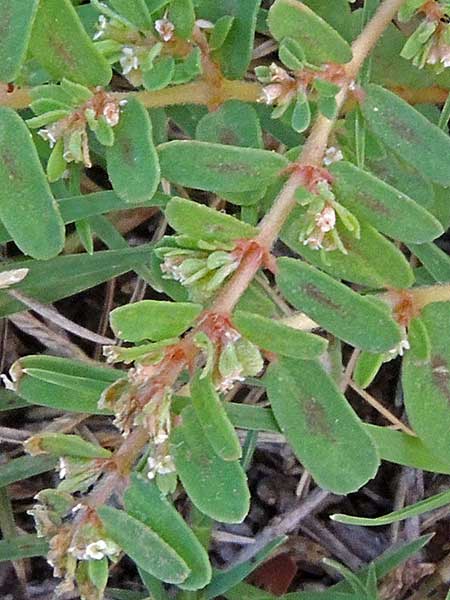
Rattlesnake Weed
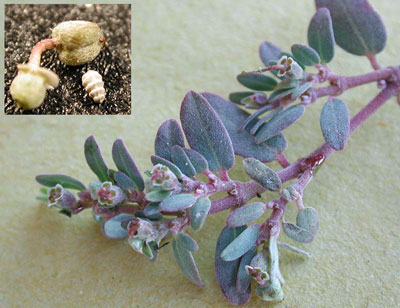
Chamaesyce albomarginata
Yuma Sandmat
Chamaesyce setiloba
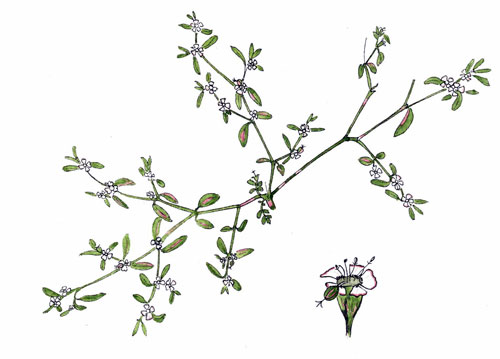
Grows prostrate on ground. Copious white sap from broken stems. Involucre has petaloid appendages and surrounds a group of minute flowers. Seed capsule, like other euphorbs, is three parted. Detailed Description
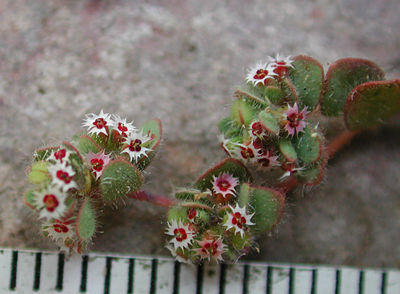
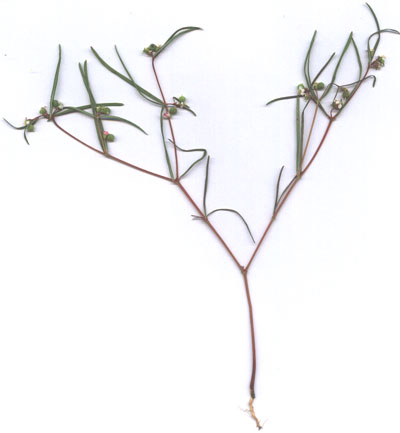
Growing mostly in deep sandy soil. Appendages of minute involucres with narrow, pointed lobes. Copious white sap from broken stems. Detailed Description
Small-seed Sandmat
Euphorbia polycarpa
Red-gland Sand-mat
Euphorbia melanadenia
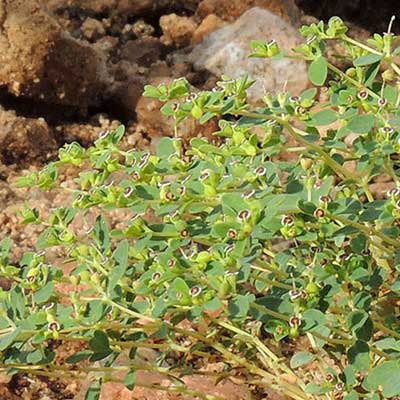
A frequent spurge of rocky slopes in the Sonoran Desert. Grows low or even prostrate on ground. Copious white sap from broken stems. Involucre and flowers are small as are the seed capsules. Detailed Description
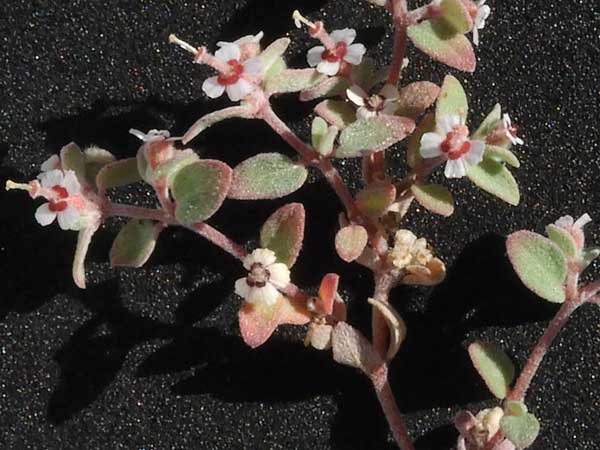
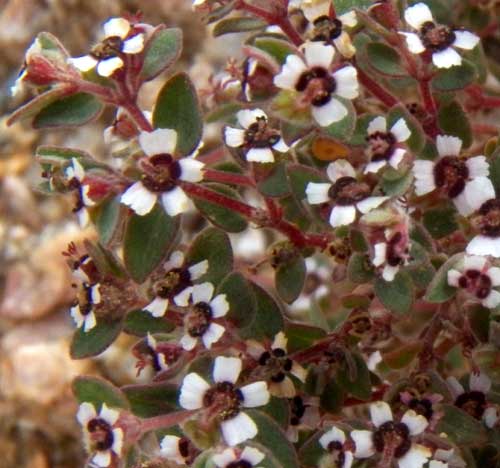
Broad white limbs on the red glands of this mostly ground-hugging herb. Detailed Description
Head Sandmat
Chamaesyce capitellata
Arizona Sandmat
Euphorbia arizonica
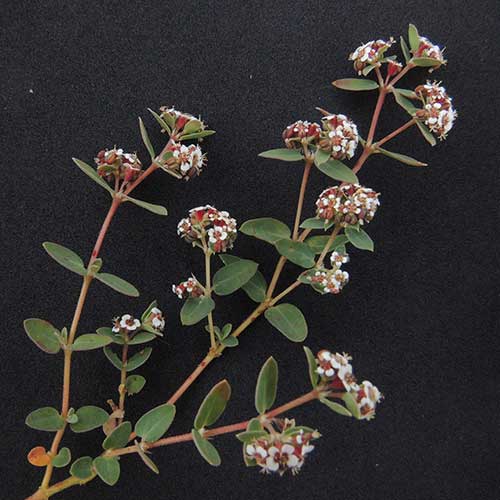
The small flower heads are grouped into larger heads. Copious white sap from broken stems. Detailed Description
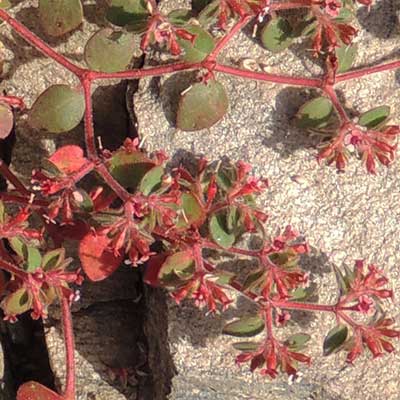
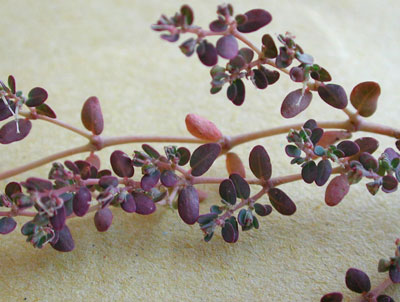
Prostrate perennial spurge of rocky slopes in the upland Sonoran Desert. Grows low or even prostrate on ground. Copious white sap from broken stems. Involucre and flowers are red with leaves reddening after cold temps. Detailed Description
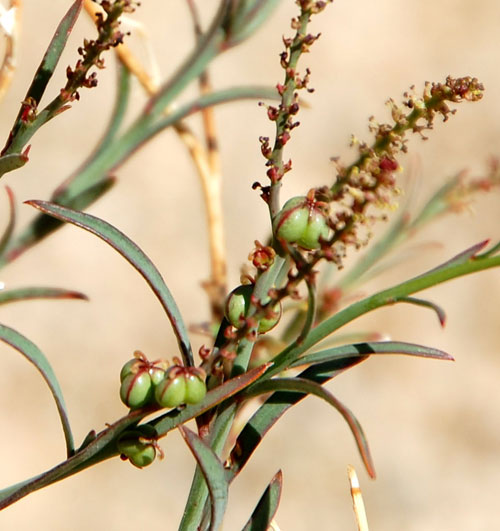
Hyssop Spurge
Chamaesyce hyssopifolia
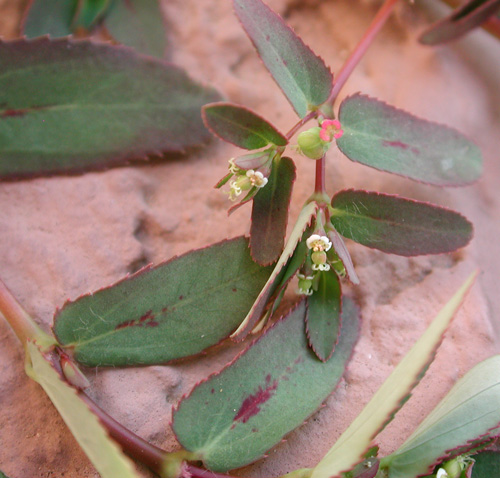
This species grows mostly upright and is a fairly common urban weed in the Sonoran Desert such as in Phoenix or Tucson. Copious white sap from broken stems. Detailed Description